HOME ABOUT ARTISTS EXHIBITIONS CONTACT TERMS &
CONDITIONS
GEORGE MORLAND (1763 – 1804)
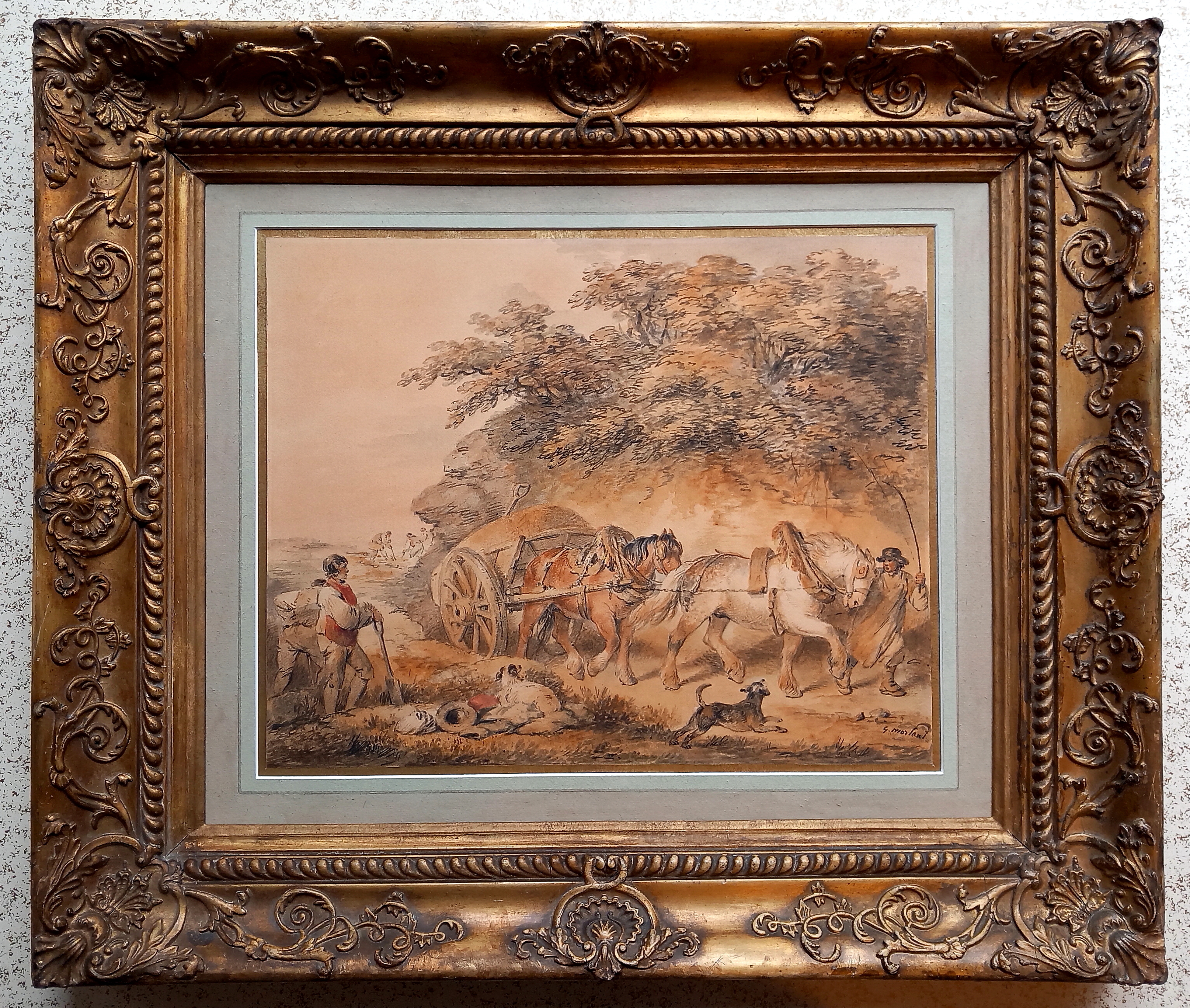
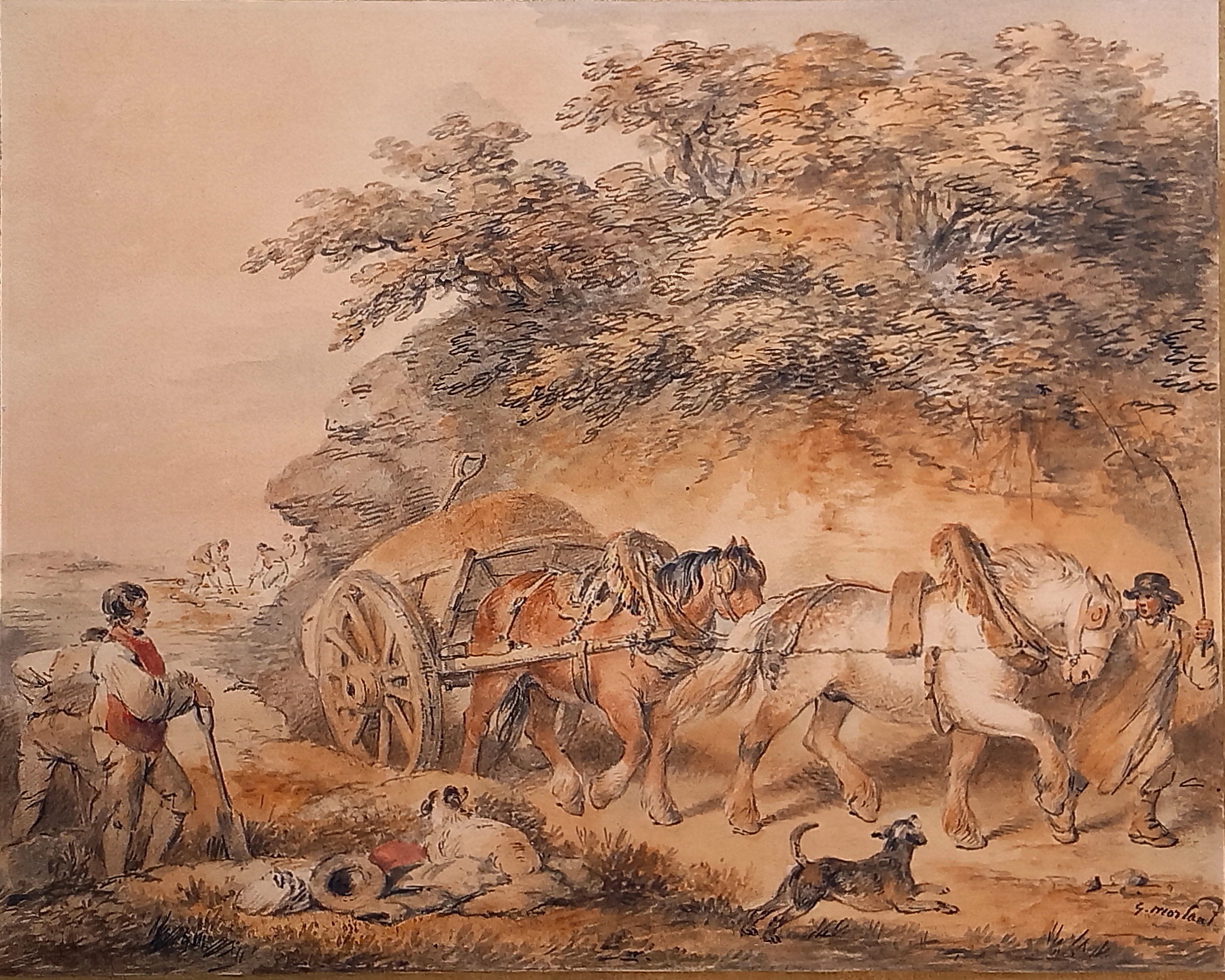
“Carting Sand”
Pen and Ink, Watercolour and Pencil. Signed
Painted circa 1791
12” x 14 ½” (300mm x 370mm)
Overall framed size 20” x 24 1/8” (510mm x 600mm) IMAGE IMAGE
Provenance:
The Executors of Mrs Lockett Agnew (the wife of William Lockett
Agnew 1858 – 1918, grandson of Thomas Agnew, Founder of Agnews Art
Dealership)
her Sale, Christies, London 15th June 1923. Lot 11 - 50
guineas
- to London Dealers Gooden and Fox
Originally with Agnew and Sons, London. Their label to reverse
Note: Morland painted an oil painting of this subject titled “Sand
Carting” dated 1791
(probably the date for this present work)
For
the oil painting see “George Morland, His Life and
Works” by Sir Walter Gilbey, Bart. & E.D. Cuming
(illustrated opposite page 22)
Presented in an antique decorative gilt frame fitted with
ultra-violet filtering low
George Morland is chiefly
known as a painter of scenes of rustic life. He first exhibited at the
Royal Academy at the age of ten. Although always a Londoner, he visited
Kent, the Southern Counties, the Isle of Wight, and went once to France.
His career was divided fairly equally between hard work and hard drinking,
although his dissolute way of life may well have been exaggerated by his
upright Victorian biographers. Certainly he often paid for his food and
drink by dashing off drawings and sketches. His fame and popularity were
helped by his friendship and double relationship with the Ward family – he and
William married each other’s sister. William Ward’s sensitive engravings
after Morland’s pictures made Morland perhaps the most generally known name in
British painting. Copies of these prints were made both in Germany and in
England throughout the nineteenth and early twentieth centuries. Although
at times he received comparatively large amounts from engravers and from
private sales, he was arrested for debt in 1799 and ultimately died in a
sponging house. His true watercolours are rare often with watercolour over ink and pencil.
Soft-ground etchings were published after many of his drawings. He was at
his best with animals and small groups of peasants in wooded landscapes.
Examples of work by George Morland are in the British Museum, the Victoria and
Albert Museum, Glasgow Art Gallery, Leicestershire Art Gallery and Newport Art
Gallery. Many books have been published on Morland, notably George Daw in
1807 and others within months of his death in 1804.
An extensive biography “George Morland, his
Life and Works” by Sir Walter Gilbey, Bart. and E.D. Cuming. was
published in 1907 and more recently “George Morland, Art, Traffic and Society
In Late 18th Century England” in 2015